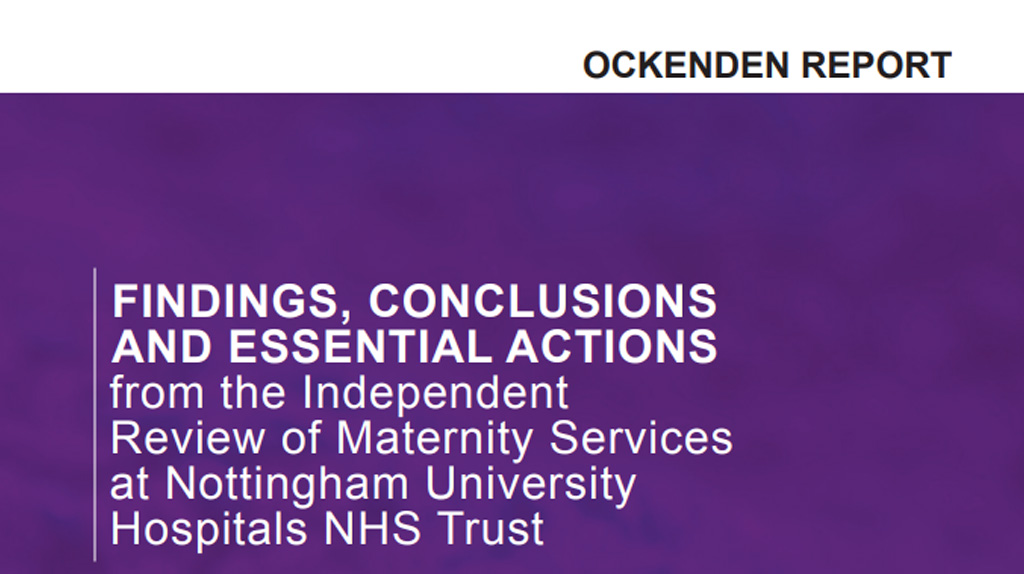
The final report of the Independent Maternity Review into Nottingham University Hospitals NHS Trust, published on 24 June 2026, represents the largest independent review of obstetric and neonatal care failures in NHS history.
Led by Donna Ockenden, the multi-disciplinary team reviewed approximately 2,500 family cases spanning 2012 to 2025, concluding that 520 mothers and babies suffered potentially avoidable harm under the Trust’s care.
For clinical negligence solicitors and medical malpractice insurers, the 400-page parliamentary paper (HC 284) moves beyond broad systemic criticism. It provides detailed findings on recurring clinical failures, offering valuable reference points for practitioners assessing breach of duty and causation in both active and future obstetric claims.
Grading Metrics for Sub-Optimal Care
A critical metric for legal practitioners is the review team’s application of a formal 0–3 grading system to evaluate the quality of care.
A Grade 2 or 3 categorisation denotes sub-optimal management where an alternative clinical approach would reasonably be expected to have altered the outcome.
The report identifies a remarkably consistent pattern across several categories of injury:
Stillbirths: Of the 462 stillbirth cases reviewed, approximately 20% (one in five) were graded as receiving Grade 2 or 3 sub-optimal care.
Maternal Deaths: Of the 27 maternal deaths examined, 21.4% involved significant or major care failures that directly affected the outcome.
Hypoxic Ischaemic Encephalopathy (HIE): In cases involving infants left with severe brain injuries or cerebral palsy, the review concluded that better care could have prevented the injury in half of the cases reviewed.
Systemic Mis-Grading and the Impact on Liability
A major structural finding likely to influence the assessment of historical maternity claims is the review’s identification of long-standing governance failures.
The review found a persistent pattern of the Trust inaccurately reporting, grading and investigating serious incidents. Significant clinical injuries were repeatedly downgraded or classified as “unavoidable” during internal reviews, reducing opportunities for external scrutiny.
For practitioners, the findings reinforce the importance of independently reviewing historical medical records and Root Cause Analyses rather than relying solely on previous internal Trust conclusions.
Recurring Clinical Failure Patterns
The report identifies several recurring clinical failings that may assist practitioners when considering potential breaches of duty:
- Dismissive telephone triage: A recurring pattern of staff attributing significant symptoms to maternal anxiety, discouraging women from attending hospital.
- Fetal monitoring misinterpretation: Repeated failures to correctly interpret cardiotocograph (CTG) traces, resulting in missed signs of fetal distress.
- Delayed escalation: A workplace culture that discouraged junior staff from escalating deteriorating cases to senior clinicians, leading to delays during critical periods for intervention.
What Practitioners Need to Know
The report is likely to play a significant role in future obstetric negligence litigation.
Its findings provide claimant and defendant practitioners alike with an extensive independent assessment of recurring clinical failings, governance issues and standards of care that are likely to be examined in both existing and future claims.
The review also makes 18 Immediate and Essential Actions for maternity services nationwide, including:
- the standardisation of telephone triage
- mandatory multidisciplinary training
- tighter regulation of obstetric anaesthetic record-keeping
Together, these recommendations are likely to become important reference points when considering the expected standard of maternity care in future cases.
Sources & References
Independent Maternity Review of Nottingham University Hospitals NHS Trust (HC 284), chaired by Donna Ockenden, published 24 June 2026.