MPs accuse Department of Health of failing to act despite 24 years of warnings—government response due by 30 March.
The Public Accounts Committee (PAC) has issued its strongest criticism yet of the government’s failure to tackle spiralling clinical negligence costs, demanding concrete action within eight weeks and warning that the system is “struggling to keep its patients safe from avoidable harm.”
In a report published on 30 January 2026, the cross-party committee found that the Department of Health and Social Care (DHSC) has taken no meaningful action to address clinical negligence despite warnings dating back to 2002. Government liability has quadrupled in real terms over two decades, reaching £60 billion in 2024-25—second only to nuclear decommissioning on the national balance sheet.
Two-month deadline for operational plan
The PAC is demanding the following within two months:
-
An operational plan from government to tackle clinical negligence, including timescales and measurable outcomes.
-
A national framework for improving patient safety with clear annual improvement targets.
-
A comprehensive data-sharing system between NHS Resolution, NHS England, and the Care Quality Commission to ensure lessons from claims feed into frontline practice.
-
Clarity on when the government will publish David Lock KC’s expert review into clinical negligence, commissioned as part of the NHS 10 Year Plan.
Drowning in unimplemented recommendations
The committee found that over 1,500 patient safety recommendations made through coroners’ Prevention of Future Deaths reports remain unimplemented.
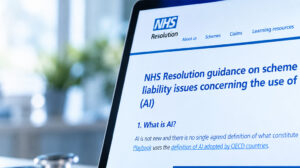
NHS Resolution identified 3,600 insights from clinical negligence claims in 2023-24, but the PAC concluded that “recommendations are not being acted on in a way that demonstrably improves patient safety.”
Dame Meg Hillier MP, chair of the committee, said the system was “drowning” in safety recommendations with no mechanism to prioritise, track, or enforce action. The report notes that similar warnings were made by the National Audit Office in 2001, 2017, and 2023—all with limited effect.
Maternity claims dominate payouts
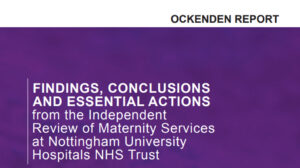
Obstetrics cases represent just 2% of clinical negligence claims by volume but account for 68% of total damages paid in 2024-25.
The average maternity claim settles at £11.2 million and takes 11-12 years to resolve.
The PAC highlighted that 60% of women bringing maternity negligence claims had their perineal tears initially misdiagnosed, a failure the committee described as “entirely avoidable with proper training and examination.” The report also noted that NHS Resolution paid out £2.8 billion in damages and legal costs in 2023-24, of which £536 million (19%) went to claimant solicitors’ fees.
What case managers and solictors need to know
The PAC is explicitly calling for reform of the clinical negligence system, including exploration of Fixed Recoverable Costs (FRC) for lower-value claims—an initiative delayed since the change of government in 2024.
The committee wants urgent publication of the Lock review, which is examining rising legal costs and claimant experience. Industry bodies including APIL and the Law Society submitted evidence to Lock’s inquiry but have not yet seen draft findings.
Solicitors should be prepared for increased political scrutiny of legal costs and case duration over the coming months.
The government is required to respond to the PAC’s recommendations by 30 March 2026.
No mechanism to enforce change
The PAC concluded that without structural reform—including clear accountability for patient safety improvements and enforceable mechanisms to implement lessons learned—clinical negligence liability will continue rising while patient harm remains unaddressed. The committee noted that while NHS Resolution shares data with trusts, the organisation lacks the power to compel trusts to implement safety recommendations.
Sources:
-
House of Commons Public Accounts Committee, Clinical negligence in the NHS, HC 106, 30 January 2026.
-
National Audit Office, NHS clinical negligence, 6 October 2023.